Trees add to the value and appeal of Colorado Springs real estate. However, their roots pose a risk to underground piping. Many people wonder whether today’s plumbing materials really eliminate those problems. Spotted Dog Excavating Sewer & Water Repair installs, repairs, and replaces sewer lines throughout Colorado Springs. As we perform the inspections, we notice how the native plants interact with the current plumbing materials. In this article, we will discuss some common questions about tree roots. We’ll take a look at how they affect modern pipes and the signs to watch for.
Table of contents
- How Tree Roots and Sewer Lines Interact
- How Tree Roots Enter The Pipes
- How Modern Pipes Compare To Older Ones
- Materials Used For Modern Sewer Lines
- How PVC and HDPE Pipe Compare To Clay And Cast Iron
- Types Of Pipe Joints On Modern Pipes
- Signs Your Pipes Might Be Affected by Tree Roots
- Distinguishing Between Tree Roots and Other Causes Of Clogs
- Prevention and Maintenance
- Trees To Avoid Near Sewer Systems
- Recommended Inspection Frequency
- Repair and Solutions
- Cost of Repairs in Colorado Springs
- Local Considerations for Colorado Springs
- Contacting Sewer Contractors
- Final Thoughts
Estimated reading time: 7 minutes
How Tree Roots and Sewer Lines Interact
Certain kinds of plants are more likely to affect your underground pipes than others. The trees that tend to be a concern in Colorado Springs are those that have extensive moisture-seeking root systems. These include:
- Cottonwoods
- Aspens
- Willow
All these species aggressively look for water, which is often hard to find when the soil is dry. Other trees with wide root systems that will reach down deep into sewer infrastructure are Silver Maples and Elm trees.
How Tree Roots Enter The Pipes
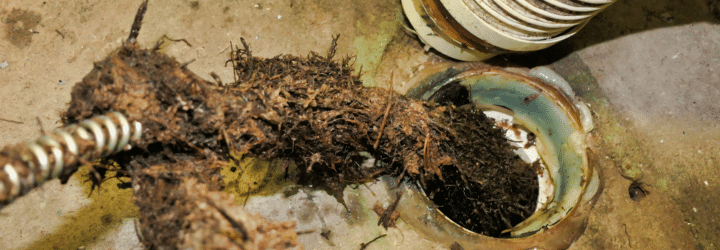
Tree roots naturally grow toward a water source. Sewer lines are a reliable source of water, oxygen, and food. A sewer line needs only to release a very small amount of water vapor to be attractive to tree roots, especially when they emerge from a gap where a pipe joint isn’t connected well, or the pipe is cracked. Once a small root enters a crack in your pipes, it can quickly grow, becoming larger and thicker as it breaks into the pipes and obtains water.
Resource: union.ces.ncsu.edu
How Modern Pipes Compare To Older Ones
Modern sewer pipes have significantly more resistance to tree roots than older pipes. Today’s plumbing materials are much more resilient than traditional materials. In older homes throughout Colorado Springs, the piping is frequently either clay or cast iron, both of which are very susceptible to decay and allow easier entry to tree roots. While modern materials aren’t indestructible and can still fail from poor installation or if the soil moves under your home, they don’t degrade or allow roots to easily access the water as old pipes did.
Materials Used For Modern Sewer Lines
Sewer replacements today often use materials that help prevent the entry of tree roots. These include High-Density Polyethylene (HDPE) and Polyvinyl Chloride (PVC). The inside of both of these pipes is smooth and durable with walls that won’t rust or rot or become porous, and therefore, there are no easy openings for roots to exploit.
How PVC and HDPE Pipe Compare To Clay And Cast Iron
Clay pipes are naturally porous and prone to cracking as the earth shifts, so they can allow roots almost instant access. Cast iron pipes rust over decades, causing them to lose structural integrity as the rust eats away at the metal’s thickness. PVC and HDPE pipes don’t suffer from these defects, can shift slightly with the ground as needed without compromising their seal, and don’t corrode.
Types Of Pipe Joints On Modern Pipes
The joints between sections of pipe are another area where the vulnerability of older systems allowed for the most common tree root intrusions. Older clay pipes used mortar joints, which are easily eroded and degraded over time by moisture inside the pipe and by tree roots. Newer PVC systems use durable rubber gaskets that are held in place with adhesive solvent. HDPE piping is thermally welded at the ends, permanently fusing them for a secure, strong connection with a very minimal opening for roots to enter.
Signs Your Pipes Might Be Affected by Tree Roots
Some early indications that tree roots may be inside your pipes include:
- Slow drains in your sink, bathtub, or toilet
- Toilet bubbling when you use a faucet
- Sewage smells coming from inside your home
- An outside spot with unusually wet, bright green grass
Distinguishing Between Tree Roots and Other Causes Of Clogs
If you need to determine whether you have a root blockage or just an obstruction in the line, examine how it’s acting. If only one or maybe two fixtures, like the sink or the toilet, are backing up, the problem is probably localized to a section of the branch drainpipe leading to that fixture or to the fixture itself. In contrast, if you see that all your fixtures are draining slowly, you likely have a problem with the main sewer line, which could be caused by tree roots if your home still has old materials in its sewer pipes.
Prevention and Maintenance
You need to know where your sewer utilities are to prevent damage before it starts. You should not landscape your yard with large shrubs or trees in the area where sewer utilities are located. Regular maintenance limits root mass growth and enables early intervention, minimizing the risk of catastrophic damage to pipes.
Trees To Avoid Near Sewer Systems
Avoid planting large or fast-growing trees near underground laterals. Specifically, you should never plant Cottonwoods, Willows, Poplars, or Aspens near buried utilities. If you do want to plant trees or shrubs nearby, select a slow-growing species with a shallow root spread. Regardless of what you choose, ensure the mature root system’s potential growth remains at a sufficient distance from utilities on your property.
Recommended Inspection Frequency
It is recommended that you schedule a professional video camera inspection of your sewer lines every 1 to 2 years. In older neighborhoods or areas with many mature trees, you may want to schedule annual inspections. These inspections monitor the health of your pipes and identify small root intrusions, so you can act quickly to prevent costly pipe damage.
Repair and Solutions
Once roots have invaded your pipes, it is critical to have an expert remove them immediately. Professional plumbers can use high-pressure water jetting to cut roots and flush out the remaining debris from your pipe. We can also use mechanical augers with cutting blades to chip away large root masses. While this restores function to your sewer system, it does not fix any damage to your pipes that allowed roots to enter, and those repairs will have to be addressed in a separate job.
Cost of Repairs in Colorado Springs
Repair costs will vary depending on the severity of the damage, the chosen repair method, and the length of the piping.We will be able to provide a clear estimate after we conduct a camera inspection.
Local Considerations for Colorado Springs
Soil and Climate Conditions
Trees in Colorado Springs grow aggressively. Since we live in a semi-arid climate with low moisture levels, trees actively develop root systems to reach available water sources, including municipal sewer lines. Furthermore, our region has expansive bentonite clay soils that expand with water. These soils contract as water is removed by tree roots, potentially causing pipe damage from this movement and creating an entry point for roots.
Utility Assistance Program
It is always the property owner’s responsibility to perform maintenance and repairs on the service line that carries the drain from the building to the connection in the city right-of-way. Colorado Springs Utilities has a limited number of service line warranty program options available to its customers. Homeowners may wish to review their existing insurance policies or explore purchasing a service line protection policy to mitigate the cost of repairs to outside plumbing infrastructure.
Contacting Sewer Contractors
Do not hesitate to contact a professional sewer contractor as soon as you notice problems such as slow-moving drains in multiple fixtures, persistent gurgling, or foul odors emanating from your yard. Chemical root killers from the store are rarely effective at treating pipe damage and may cause more problems. A licensed excavator with a camera, a high-pressure hydro jetter, and mechanical root-cutting equipment is necessary to properly address these types of issues.
Final Thoughts
Root intrusion into sewer lines is a constant threat in your yard, however, you can significantly reduce the likelihood of problems by using durable pipe material and performing regular maintenance. Reduce root problems by understanding where your sewer lines are, carefully choosing planting options, and scheduling periodic camera inspections. If you are concerned about root problems affecting your sewer lines, contact Spotted Dog Excavating Sewer & Water Repair for inspections and repairs.